Saturday, February 8, 2025

Film Openings

    As I dive deep into the depths of the different dunes of the internet, I come across film analyses of various films, which is what inspired me to do a form of my own analyses for my blog; specifically analyzing film openings of different media texts. While I'm at it, why not analyze openings of the genre I'm working with for this year's portfolio project? That's exactly what I'll be doing.

    First and foremost: Breaking BadWe are immediately thrown straight into a cyclone of chaos within the Breaking Bad pilot. A dramatic wide shot of the New Mexico desert opens the scene, showcasing an RV tumbling across the barren and quite desolate landscape, leaving behind a trail of dust. The emptiness of the desert and the sole focus on this mysterious RV represent the isolation and lawlessness of the desert. It is a land without law, without borders, and without reason. Walter White's journey will become representative of these reasons.


   The frantic and generally chaotic energy inside the RV is captured by handheld camera work: Jesse, an additional protagonist, is shown laying unconscious on the floor of the RV among a messy layout of lethal chemicals and equipment, while Walter, looking absolutely disgusting (soo out of character) and vulnerable in his boxers (yes, it's sort of crazy...), is seen rocking a gas mask. The shakiness of the clip underlines Walter's urgency and the unforeseen nature of the situation that we, the audience, remain unaware of, and it overall reflects his own feelings, notably his internal conflict that gets revealed as the story progresses.

    The mise-en-scène further enriches this narrative. The desert represents a moral wasteland, reflecting Walter's impending ethical decline. The RV serves as a liminal space, a mobile meth lab that symbolizes his double life. Walter's state of undress exposes his vulnerability, while the gas mask signifies his initial reluctance to fully embrace his new identity. The gun he wields foreshadows the violence he will eventually adopt.

    In terms of editing, rapid cuts between the exterior desert chase and the chaotic interior of the RV create a sense of urgency and disorientation. This frenetic pacing is momentarily halted when Walter records a video confession, with the editing slowing to linger on his face, allowing viewers to absorb his fear and resolve. This deliberate shift in pacing underscores the gravity of his transformation.

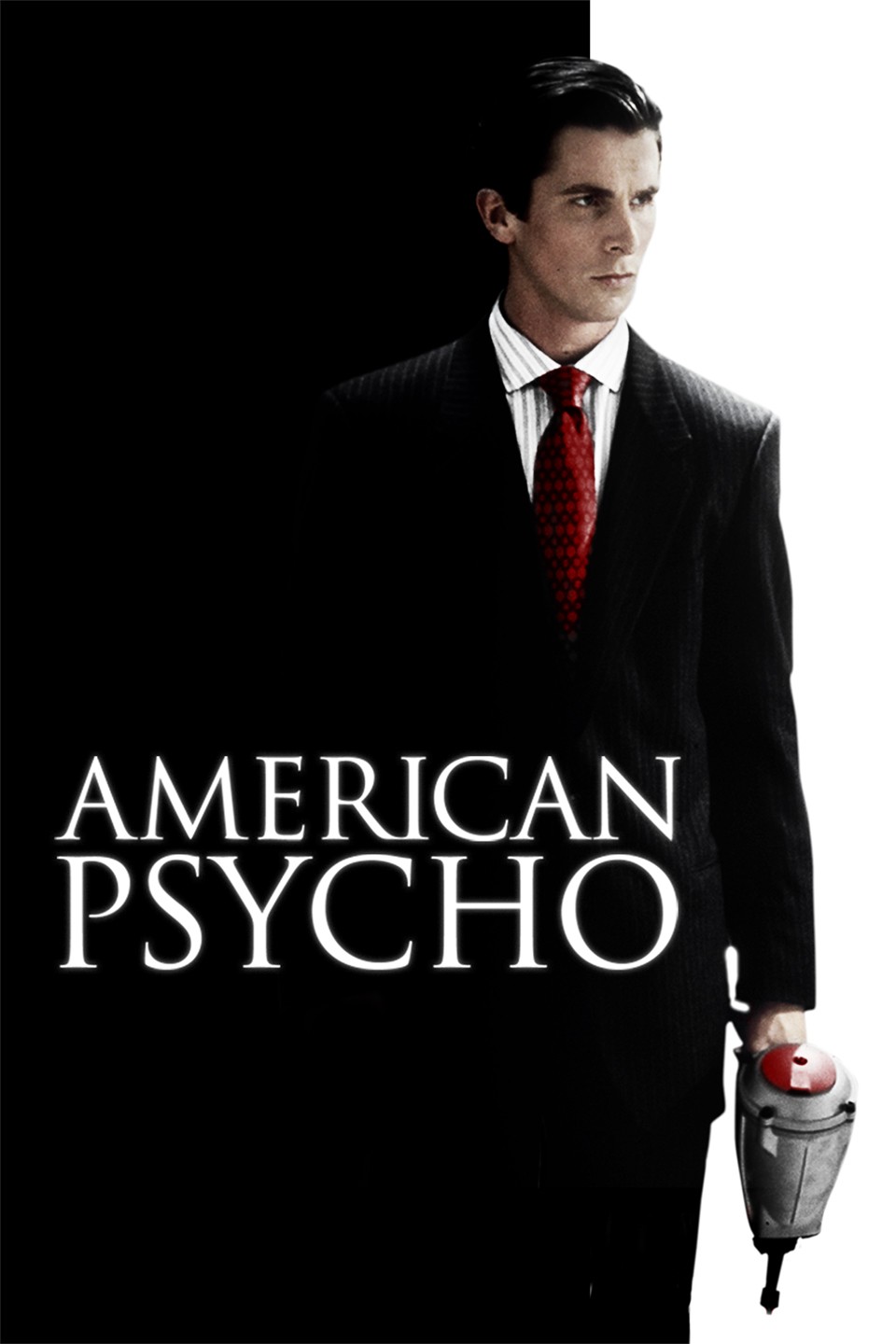
    Now, onto American Psycho (2000). This film particularly intrigues me, and although I had already done research on it in my previous blog post, I'm gonna do it again! From different perspectives, this time. Obviously. American Psycho opens with a sequence that masterfully juxtaposes appearance and reality. The film begins with extreme close-ups of a red liquid dripping onto a pristine white surface, evoking the imagery of blood. However, as the camera pulls back, it reveals that the liquid is a gourmet sauce being artfully plated. This subversion sets the tone for a narrative steeped in deception and superficiality.

    The plating shown at the beginning of the film sequence is captured through slow and suspenseful tracking shots, ideally mirroring main character Patrick Bateman's obsessive-compulsive attention to detail and his absolute obsession with appearances and name brands. Mid-shots of a rather high-end restaurant show customers concentrated on trivial conversations, only further highlighting and critiquing the meaninglessness behind the materialism of the narrative world.

The mise-en-scène is rich with symbolistic shots and presentations within scenes:

  • Red Sauce: Initially seen by the audience as blood, it underscores the deep-hidden violence beneath Patrick Bateman's extravagant and shiny image.

  • Pristine White Plates: Symbolize sterility, control, and order, all reflecting Patrick Bateman's façade of a personality, or, rather, persona.

  • High-end Restaurant Setting: This setting embodies American Psycho: the excess and the emptiness of wealth, critiquing a society obsessed with statuses and socially constructed hierarchies.

    The editing repeatedly reiterates the symbolism behind these themes through deliberate pacing and misdirection to the audience. The initial close-ups create suspense, leading to a reveal that frazzles expectations, much like Patrick Bateman. The particular nature of the cuts mirror his calculated nature, while occasional jump cuts in dialogue scenes reflect his detachment and the fragmented reality he inhabits.

    Finally, but just as importantly, here is Parasite (2019). The low-angle shot of a semi-basement window at the beginning of the film Parasite places the viewer right into the cramped and extremely crowded environment of the Kim family. The family's extremely small and disorganized living area is seen as the camera gradually tilts lower, providing a visual representation of their financial situation.


    A lot of things in this opening, most notably the window, convey plenty of narratives. The audience is given a limited and tight glimpse of the outside world through the window, ––serving as a message that this is what the family sees on a daily basis–– which acts as a symbol and constant reminder of the family's  obstacles standing in their way toward achieving a better life. The exclusion and the brutal characteristics of the area around them have been emphasized by the dim lighting and overall tight framing.

    The editing in this sequence is hastily trying to show the audience all of the deep and personal angles of the family's life, symbolizing how truly vulnerable the family is. The long takes allow the viewer to absorb these details. Deliberate pacing fosters a sense of realism and immersion; this differs immensely with the more dynamic editing that displays the lives of the affluent and luxurious Park family later in the film.

By making these parallels, the film juxtaposes the Kims' subservient existence with glimpses of the world above and the people who live there, subtly underlining the class struggles and differences that are absolutely vital to the narrative. This technique creates a binary between the two families as if there wasn't one already, setting up the rising action and climax of the story. 


Friday, February 7, 2025

American Psycho: A Brief Analysis


       So as I gather my thoughts, with my portfolio schedule in hand, I keep wondering what to do... what to do. Thoughts and ideas race through my head as I rack my brain trying to fit my team and my's idea into a genre... it's difficult labeling things, especially when they're a mixture of three wildly different personalities and perspectives. After leveling myself and slowing down my thought process, I stop jumping around different ideas and processes and stick to one: research different genres. This is exactly what I'll be doing today, except I already did the research with my team and we decided to label our project as a psychological horror/thriller. So, in that case, I'll be analyzing different film openings from this genre to know what I'm really getting myself into. You know, immerse myself into the world of psychological thrillers and nerve-wracking movies. I'll only be doing three today, but more analyses will come, don't worry. When the idea of a psychological thriller came into my brain, I admit: I was a lost cause; but then I started to remember all of the different pieces of media I've ever watched, and, well, psychological thriller made up a lot of them. 

    So, I got thinking and decided I'll start with a bang: American Psycho (2000). American Psycho is a psychological horror that satirizes the concepts of consumer culture, toxic masculinity, and the overall emptiness that materialism mixed with narcissism carries. The film tells the story of a New York investment banker, Patrick Bateman in the 1980's, who lives a double life: one side as an investment banker, the other as a psychopathic "serial killer" for lack of a better term.

    At it's very core... American Psyscho critiques the raw and soulless materialism harbored within the crevices of the postmodern setting of 1980's corporate America. When I was watching the film adaptation, (for context, I have already read the book) the director, Mary Harron, perfectly visualized Bateman and his feverish obsessions with appearances and his character embodies the very concept of superficiality–the frequent mentions and focuses on designer suits, business cards, restaurant reservations, objects, you name it, only highlight how Bateman's character only highlights how his obsession with superficial things allows him to "blend into" society, even while he commits heinous and inhumane acts, adding a tang of irony to the film, only further emphasizing the satiric nature of the film.

    There is a specific scene that always comes to my mind that, in my opinion, truly embody the current state of the forever-evolving media sphere, and that is: the business card scene. This scene depicts Bateman and his work colleagues intensely comparing the different aesthetics of their business cards ––something that is straight-up trivial–– and to add the cherry on top, all the cards look nearly identical. However, this scene only serves as a microcosm for American Psycho's narrative world ––that can be applied to our world, as well–– and only unveils its true nature: superficial, emotionally null, hyper-competitive, and hyperreal, if you will.


Tuesday, February 4, 2025

Schedule for my portfolio!


Hi Cambridge people :) today during my AICE Media class my group and I spent the whole period planning out our schedule for the final portfolio project! It's gonna be so much fun, I finalized it today after school and it's looking great. 

To summarize briefly, weeks 1-4 will be purely dedicated to planning, while weeks 5-8 will be dedicated to filming and editing, and if time allows, a few tweaks here and there to ensure a high quality final product is achieved! 


Sunday, February 2, 2025

Researching for my portfolio!

 After much thought these past two days about the upcoming portfolio project, I've decided to start thinking about more genres that could be storyboarded, in addition to the psychological horror idea my team and I seem to be set on. Thus, I'll talk about the two main components of the psychological horror subgenre: thriller and mystery. Although they are grouped into the same group of genres, thriller, and mystery are two very different descriptors. 

On one hand, when a media text, specifically a movie or show, is labeled as a thriller, it's meant to get some kind of rise out of you; to have you at the very edge of your seat just waiting for the next thing to happen. You get a sense of anticipation, uneasiness, and a desire to know more. Thrillers usually tend to use more cliffhangers than other genres, to keep that high of desire going. Many films by Alfred Hitchcock paved the way for many of today's thriller movies, being credited as the "beginning of the thriller genre."

On the other hand, although being very similar to thriller, the mystery genre still has many things that set it apart. Many films that have to do with figuring something out, like murder mysteries, are labeled as mysteries (of course). Mystery goes way back to the nineteenth century, being an outcome of the English Renaissance, where dozens of literary works came one right after the other. One of the most memorable mysteries from this time is Sherlock Holmes, a series of stories about a detective investigating crime through law and order.

Overall, thriller and mystery pair together exceptionally well, creating the perfect mix called the subgenre of psychological horror! All the feelings these two specific genres make an audience feel really mess with your perception, giving them the reputation they have.

Friday, January 31, 2025

A New Beginning: Portfolio Project

 After an entire semester of this class, I'm ready to move on to the next step: the Cambridge Portfolio. 

The Portfolio Project is one that's been talked about all year, and I've known about it since last year when three of my friends who took AS Level were telling me all about it. Well, now it's my turn. Of course, this is a big project; it's for the AICE exam later on in the year, and it's a big deal. I only truly realized how big of a deal it was after missing probably the most important day of the year when we were given more insight and information into this project.

Luckily, I've got the fundamentals down, thanks to my awesome members Alejandro and Joaquin, both of whom filled me in on what I missed out on. Getting back on track wasn't easy, but I set my mind to it and now I'm feeling very confident about this project. We've been brainstorming for a couple of days and put together an amazing idea: a psychological horror.

Yes!!! A psychologically terrifying way to open our film! It's going to be great. A storyboard is currently in the works, but aside from that, Alejandro managed to reach out to a few artists about using their copyrighted music in our film opening, and guess what: we got responses! So far, one has said yes, and we're waiting for responses on the others. 

The three of us have been planning out this entire project and will dedicate this week purely to planning, not only because planning is the backbone of every project, but also because two out of the three of us will be busy this upcoming weekend, not making it a good week to start filming just yet.


Wednesday, December 18, 2024

Monday, December 9, 2024

Music Marketing #1

    It's another day in AICE Media, and we get assigned another project. It should be fine, and a breeze to get through, right? Well, this project was unlike any other we had gotten so far in the school year. This project would make up part of our midterm, and it was also a group project. My group and I congregated in a corner of the room and waited patiently until we were called up by Mrs. Stoklosa to see what music genre we'd be working on for this music marketing campaign. Then, we got it. R&B.

    First things first, we decided to plan everything out amongst our group members. The first part of this project we were told to do was to research the genre, more specifically, research different production companies and artists that produce music for the genre. Alejandro and I quickly got to work, digging at the internet for hours for good, interesting information on SZA and Steve Lacy, going all the way from their artist websites to niche corners of the internet. However, Joaquin and Simón lagged behind, finalizing their research only a few days before break ended, understandably so. After soaking up this newfound information on the genre, with energy accumulated over the break, we quickly got to work and plan out our project. Alejandro and I would work on the presentation, Joaquin on our storyboard for our music video, and Simón on our brand logo. We had to build a new persona and entire brand from the ground up, so we had to make wise use of our time. In doing so, we delve into different types of aesthetics, looking for the perfect one for the brand we made: Richard Spice.

    Richard Spice is an R&B singer who had only recently found his passion for music during his youth and is just now attempting to get into the scene. He stands up tall and keeps his chin up, his eyes dart from thing to thing and from place to place as his focus shifts to different subjects to really understand the bigger picture around him. In doing this, he's developed a knack for writing music, incentivizing him to chase a career out of it. But, why R&B? Well, Richard was close with his mother before she passed, and when she did, he inherited all of her jazz and R&B records, and when he finally listened to them, it was a life-changing experience. As for our marketing for this Richard Spice, he brings an old vibe to the table, and to match this energy, my team and I decided that to market him to our target demographic that ranges across teens to adults, and we'd press a multitude of vinyl records and market ourselves on streaming platforms such as TikTok and Instagram, taking advantage of their algorithms.

Project Submission

 Hello, this is the link for my music video as well as all of the other requirements needed for the music promotion aspect of the project. F...